Articles Details
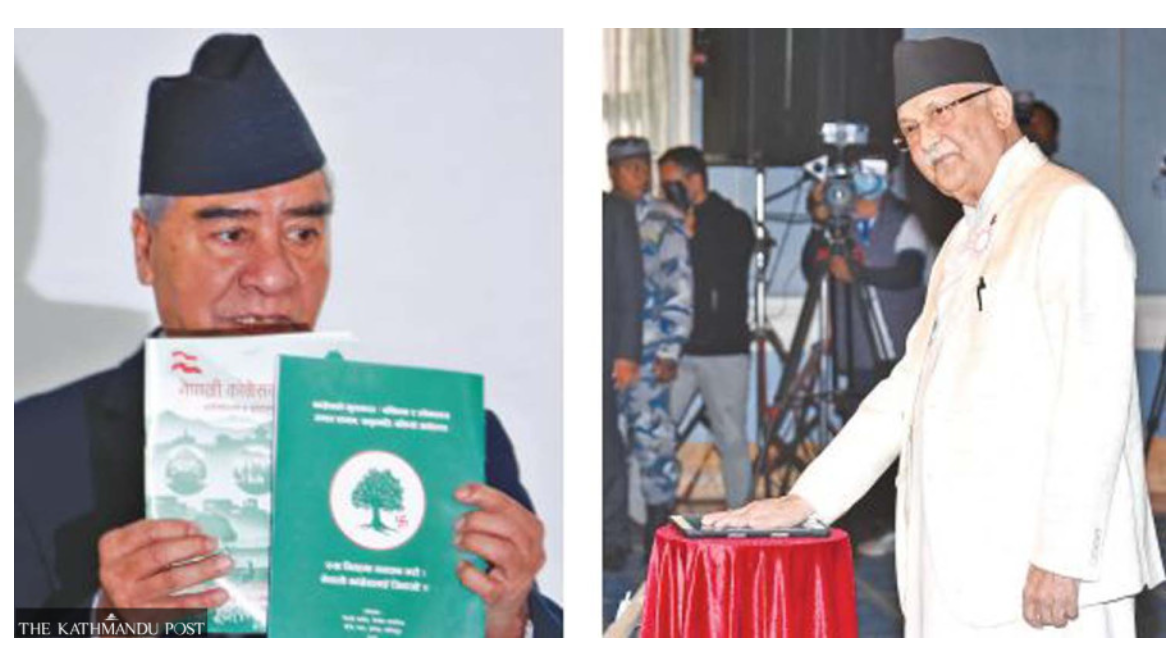
Federalism on the ballot
Federalism on the ballot
Election manifestos are treated as political documents, not governing contracts.
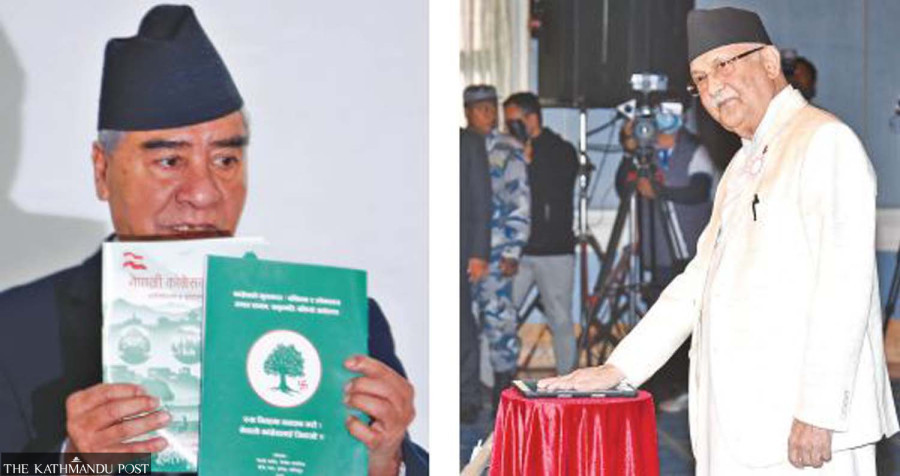
Post file photo
bookmark
29
Khim Lal DevkotaPublished at : January 20, 2026Updated at : January 20, 2026 22:50
Nepal has once again entered an election mode. Political parties are busy drafting their election manifestos, presenting promises and policy visions to the electorate. However, the upcoming election is unfolding under circumstances very different from a routine electoral cycle. Following the Gen Z movement of September 8, the then-elected government led by KP Sharma Oli was dissolved, and a new election has been scheduled for March 5, 2026.
The central objective of this election is to respond to the fundamental questions raised by the Gen Z movement, which go beyond routine governance concerns. At their core lie demands for better governance, accountability, political stability and the restoration of state credibility. The movement also raised deeper concerns regarding the electoral system and the prevailing model of governance, arguing that structural reforms are necessary to make the state more responsive and democratic. Yet, responding to these demands requires public pressure and the formation of a new government through elections—and, in several areas, constitutional amendments.
If constitutional amendments and structural reforms are indeed to be pursued, then the political commitments of parties, especially on foundational issues such as federalism, must be clearly articulated in their election manifestos. What political parties choose to include or exclude in their manifestos is ultimately their prerogative. However, it is equally vital for citizens to revisit and critically assess the commitments these parties made during the 2022 general election, particularly on issues central to Nepal’s post-2015 political settlement, such as the strengthening and institutionalisation of federalism.
The CPN (UML) election manifesto pledged to make provincial and local governments financially, administratively and institutionally capable. It promised that within two years, key provincial structures, including the Office of the Chief Minister, Provincial Assembly buildings and the Office of the Provincial Head, would be established. The manifesto also committed to the swift enactment of laws related to exclusive and concurrent powers, resolution of ambiguities surrounding civil service adjustment, activation of coordination mechanisms such as the Inter-Provincial Council, Provincial Coordination Council and Intergovernmental Fiscal Council, and the strengthening of coordination and functional relations among the three tiers of government.
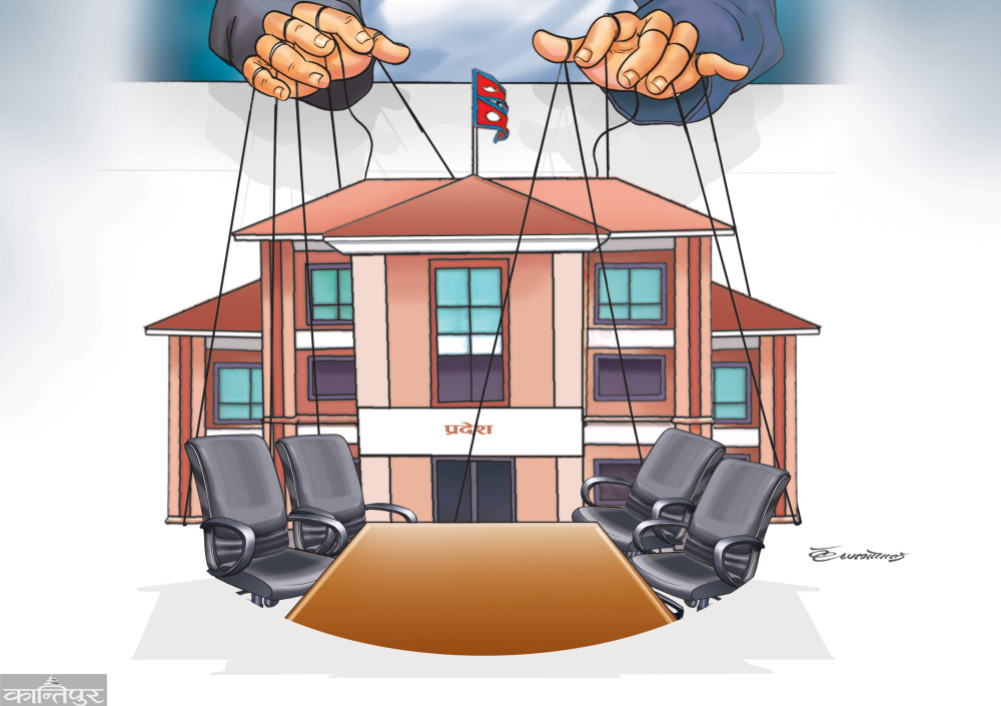
Yet, the implementation record tells a very different story. Despite these commitments being clearly stated in the manifesto, the UML-led government showed little seriousness in translating them into action. Even during its one-year tenure, meetings of constitutionally mandated bodies such as the Inter-Provincial Council and the National Coordination Council were not convened. Crucial framework laws, most notably the Federal Civil Service Act and the School Education Act, remained unenacted, largely due to a lack of political will and cooperation.
In its election manifesto, the Nepali Congress committed to upholding a system of intergovernmental relations based on cooperation, coexistence, and coordination. It emphasised the proper devolution of powers, whereby the federal government would focus on policy formulation and major development works, provincial governments on development and infrastructure, and local governments on the delivery of services directly linked to citizens’ daily lives.
The manifesto further promised to resolve performance-related problems across the three levels of government, allow provincial and local governments to operate with greater autonomy, streamline what it described as a cumbersome provincial structure, reduce the number of provincial ministries, activate intergovernmental coordination mechanisms, address human-resource shortages and enact key legislation such as the Civil Service Act. However, much like the UML, the Nepali Congress also fell short in demonstrating political resolve to implement these commitments when in power. The gap between manifesto promises and governing practice persisted.
In the case of the CPN (Maoist Centre), party chair Pushpa Kamal Dahal served as prime minister for the longest period after the 2022 election, nearly two years, with shifting coalition support at different times from both the UML and the Nepali Congress. Despite this extended tenure in office, the Maoist Centre failed to initiate meaningful steps to implement the federal commitments outlined in its election manifesto.
The Maoist manifesto articulated an ambitious vision: strengthening federalism through a combination of identity, capacity and regional autonomy; enacting laws governing exclusive and concurrent powers; equipping provinces with adequate resources; clarifying the division of roles among the three tiers; resolving intergovernmental disputes; and rationalising political institutions. It even proposed structural reforms, including limits on the size of legislatures and provincial cabinets, a fully proportional electoral system, and enhanced representation of women, workers and farmers.
Yet, instead of translating these commitments into policy action, the party pursued contradictory practices, most notably increasing the number of ministers in provincial governments, directly undermining its own manifesto pledge to rationalise executive size.
With regard to the Janata Samajbadi Party (JSP), federalism in Nepal is rooted in political struggle rather than administrative design, most notably the Madhes Movement led by Upendra Yadav. In the last general election, the JSP presented one of the most explicitly federalism-oriented manifestos among political parties, emphasising identity-based federalism, autonomy, inclusion, state restructuring and constitutional amendment, and framing federalism as a transformative political project rather than merely an administrative arrangement.
Despite this principled stance, the JSP also joined coalition governments after the election and, like other parties, failed to demonstrate urgency in implementing its manifesto commitments. A stark example emerged during the party’s tenure at the Ministry of Education, when the government introduced a School Education Bill to revive abolished institutions such as the District Education Offices and the Department of Education, effectively reversing core federal reforms.
Manifestos without consequence
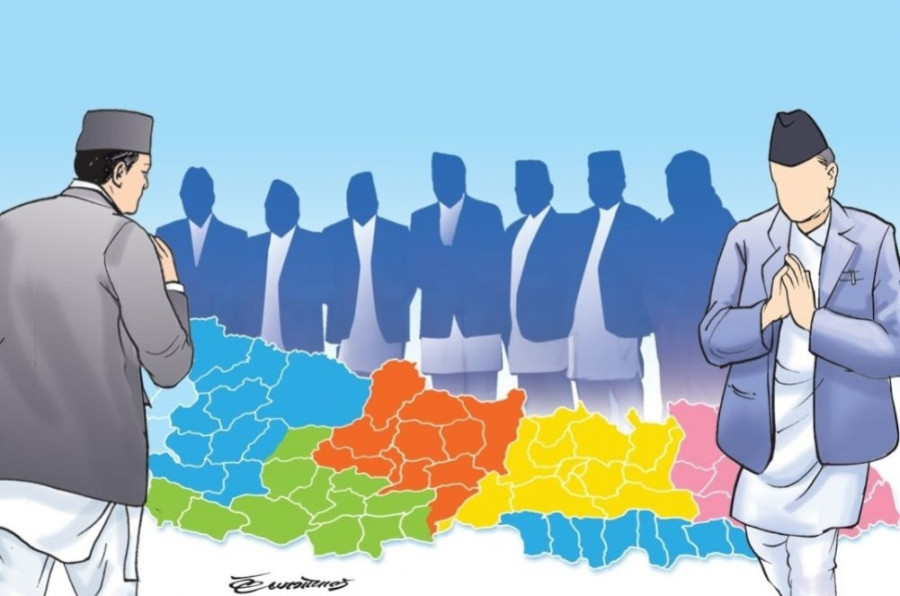
Across parties and ideologies, a clear pattern emerges. Election manifestos are treated as political documents, not governing contracts. Parties write extensively about federalism-its principles, structures and promises-but once in power, implementation becomes secondary to coalition management, bureaucratic inertia and short-term political calculations.
The Gen Z movement has fundamentally challenged this culture of impunity. It has questioned not only who governs, but how and with what accountability. In this changing context, manifestos can no longer remain symbolic texts released for electoral consumption alone. They must become benchmarks against which governments are measured.
If political parties are serious about addressing the crisis of trust confronting them, they must move beyond repeating familiar federalist language and demonstrate institutional seriousness by enacting pending laws, activating intergovernmental and constitutional bodies, respecting subnational autonomy and aligning governing practice with electoral promises.
The coming election is not merely a contest for power. It is a test of credibility—a moment when political parties must demonstrate their ability to turn promises into practice. If they fail again, the distance between the state and citizens will only widen, and federalism, so hard-won through struggle, will remain robust on paper but fragile in practice.
The credibility test is already visible in ongoing campaigns. Kathmandu Metropolitan City Mayor Balen Shah, now contesting from the Rastriya Swatantra Party as a prospective prime ministerial candidate, pledged in Janakpur on Monday (January 19) to strengthen federalism, despite having earlier opposed it. While this shift is encouraging, only clear manifesto commitments will determine whether such pledges translate into practice.
https://kathmandupost.com/columns/2026/01/20/federalism-on-the-ballot
Recent Articles
प्रदेशका सवालहरू
2025-01-15
CMs’ insights on fed...
2024-11-27
Empowering provinces
2024-11-27
Provincial struggles...
2024-11-27
प्रदेश तहको उकुसमुकु...
2024-11-27
Federalism insights...
2024-11-27